

Numerology for writers
Numerology is the belief that numbers can hold a magical or mystical significance. And I think numerology can be a beautiful tool in the mystical writer’s toolbelt.
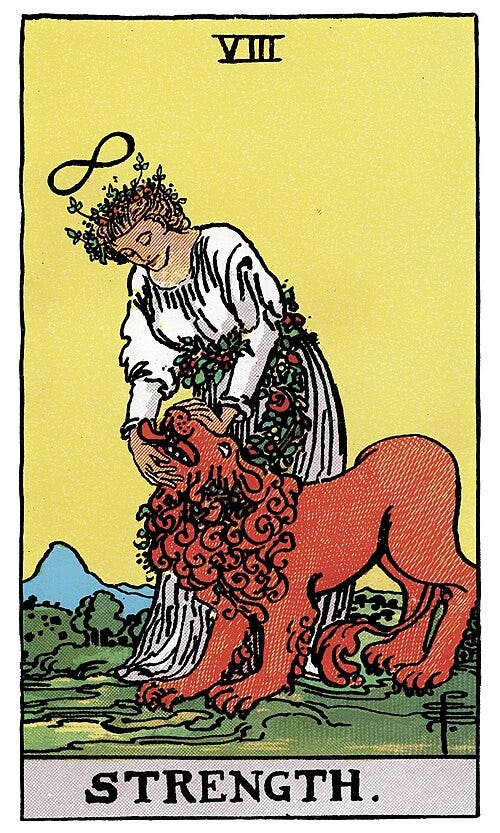
the 8, infinity
Maybe you indeed believe that numbers have a magical power or meaning, in all areas of life, and want to enhance your numerological understanding by playing with it in your writing as well. Numerology also aligns nicely with divination and forms of mystical choice-making, great practices for writers. Or maybe you just long to believe; I think that, in our world today, longing to believe is a radical act and also very healthy for us. Or maybe you enjoy chaos or randomness magic, like I do, and which numerology / number magic / number play is so good for. Maybe you are just feeling whimsical lately and want more opportunities to be playful in your writing. Number magic is amazing for that too.
Here are some meditations / ideas / prompts / practices for playing with numerology and number magic in your writing.
Astrology + (birth)date magic + your characters
Character work is really the foundation of the way I work as a writer. I’ve shared here that a character does not visit me and become part of my story world without revealing to me their astrological makeup; their birth chart.
Astrology is the idea that the cosmic dance of stars, planets, luminaries, and other celestial bodies has an impact, influence, or resonance on life here on planet Earth. And the basis of astrology is time or number magic: astrology’s cosmic dance is a dance between space, body/matter, and time. The way you “get” your birth chart is by knowing the time and place of your birth (your geographic birth place, plus your year, month, day, hour, and minute of birth) and calculating a map of what the sky looked like at that exact moment in time when and where you were born. A horoscope is doing that for any moment: casting a chart, or a sky map, for any point in time and space.
Do you know your characters’ birthdays? If so, you may want to cast their birth charts. To do this, you’ll also need to know their time of birth. Maybe you already know this about your characters, or maybe you don’t. If you don’t, you might “make one up randomly” (aka, practice randomness magic). Or you might sit with your character and ask them. Or you might choose a birth time for them based on other forms of numerology / number magic. Keep reading here to find more.
What does your character’s birth chart reveal about them? What does it confirm that you already knew about this person? What does it show that you didn’t know? What aligns with your vision or understanding of this character, and what seems surprising? Sit with and explore their birth chart for a little while.
You might want to think about time & date magic or horoscopes for your characters in other ways as well. Do they have certain dates or points during the year that are significant for them? On what days or times during the year have things happened for them over the course of their life? What days do they celebrate or mark? Do they experience any recurring seasonal rhythms or cycles?
I think one of the reasons I love astrology + character work is that a character’s astrology also reveals their elemental makeup: what mixture of the 4 elements is present within them, and interacts with who they are? I love elemental magic. I think it’s so powerful for understanding + growing the self. Elemental magic is also number magic: part of the profound magic of the 4. There are 4 elements, 4 seasons, 4 directions, 4 suits in the tarot or playing cards. A circle divides beautifully into 4 quadrants, whether that’s the circle of the year, the circle of the stars, or any other circle. 4 is a very mystical number.
*Later this year I’ll be offering a more in-depth resource for writers who want to play with astrology. Stay tuned here. :)
Number magic & poetry
Poetry itself is profoundly magical, mystical, helps us shake loose and unlock so many secrets using the power of words. Poetry is also very intertwined with number magic. Some of the elements of poetry that make it “work” are things like meter, pacing, spacing, line length, rhythm, flow, number of lines, number of syllables, stress of syllables. All of these are also elements of number magic.
For the classic exercise in poetry + number magic, I will always invite us to write a haiku. You know the haiku: it is famous and basic. I like basic things. I am a very basic bitch.
The traditional English-language haiku (it’s different sometimes in the original Japanese…) is a 3-line poem with lines of 5-7-5 syllables. We learn and write them here in school as children, I think because they are “simple”... deceptively simple. The haiku has some mystic keys as well. A haiku is often meant to reveal, in its tiny length, some deeper truth about life, the universe, the self, time… The “tool” the haiku uses to reveal this insight is an instance of natural or seasonal imagery.
The cherry tree blooms–
but only for a minute.
Blink and you miss it.
I think one of the other reasons that the haiku “works,” or really poetry in general works, is something I like to call the magic of constraints. The haiku is very constrained. It’s really short. It has a specific number of syllables in each of its 3 lines. Lots of words simply are not going to work in a haiku, like multisyllabic words just ain’t gonna fit. You will have to choose mindfully and wisely, and also simply. On top of the significant constraints of short length and syllabic specificity, the haiku also asks writers for a certain kind of insight and imagery as well: can you rise to the occasion of writing a tiny poem that uses natural or seasonal imagery to communicate a deeper truth about the universe?
I think the magic of constraints is excellent and very healthy for us writers. Is this weird? Y’all know I’m all about freedom, liberation, aimlessness, and play as well. But I think that rooting down into constraint also helps us rise.
So try a haiku. If you’re feeling spicy, maybe you’ll try some other, more “complex” poetic form that has metrical, syllabic, line, rhyme, or other number-magic constraints as well, such as a sonnet or villanelle.
Time-based writer’s rituals
There are many ways we can play with time-based rituals and constraints as writers.
For the classic: write with a timer. Writing until a timer dings can be either a stretch or a constraint, or perhaps even both. If the time you’ve allotted is too “long,” it might feel like a stretch to keep yourself writing until that timer goes off. Or if the time you’ve allotted is too brief, or if you can feel the sense of time ticking or slipping away as you chase slippery words, desperate to catch them, then you might feel constriction or urgency in your writing. I think that both of these states–stretch and urgency, creative boredom and constriction–can be healthy and generative spaces for us writers.
Another magic thing about time is that the same amount of time can feel long and short to different people, or to different versions of our self, depending on what we’re writing, or what’s going on for us in that moment. What amount of time would feel really long for you right now, would allow you to feel boredom or uncertainty and give you time to move past those states as well? What amount of time would feel “too short” for what you are asking of yourself? Give yourself a really juicy prompt like what is life teaching me right now? and set your timer for only 1 minute. Or challenge yourself to write for an entire hour. What kind of time magic is calling to you now–3 minutes, 7 minutes, 60 minutes?
There are also larger-scale time-based writer’s rituals that you might practice. You could try NaNoWriMo, which is when writers write a novel during the month of November. Maybe you won’t write an entire novel in 30 days. Maybe you’ll create an outline, blueprint, or idea; maybe you’ll just get started; or maybe working for 30 days on the same project will create a sense of momentum and consistent ritual for you.
Or you could journal or do morning pages every day for 3 days, a week, a month, a year. What length of consistent writing time would feel like a healthy stretch for you? How do you respond when you can’t or don’t feel like showing up on a particular day? What patterns do you notice about yourself, your self as writer, and your life as you see yourself against the flowing backdrop of time?
Y’all know I am big on ritual and consistency in my own writing practice. I like to show up. I like to show up tired, uncertain, bored, shaky, angry, unsettled just as much as I like showing up when I am feeling inspired, easeful, excited, in flow. Again, perhaps it’s strange because I am also all about freedom, liberation, play, doing your own fucking thing. But this is the creative dominatrix side / aspect / avatar / inner self of me. Mistress M says that you have to show up. The magic doesn’t happen if you don’t show the fuck up. The magic is in the numbers, is in the minutes and the hours and the years and the words and the books accumulating into a pile of treasure over time. We sit with our treasure. We comb through it with our fingers. We sift it for the good shit. We unearth, discover, polish the gems.
Maybe it’s a paradox, but constrictions–of time, of number of lines, of syllables, whatever–sometimes create freedom. A constraint is also a container. It says: here is what the universe is asking you to do, and here are the boundaries in which you are asked to do it. Boundaries are good. Boundaries are healthy. Constrictions create playful innovation, they create newness, they create surprise. If every third line has to rhyme, well, you’ve gotta get creative. If you have to sit here and write for one whole hour, well, you best come up with something to say. If you’re writing a 77-page novella with no adjectives, well, all your words better be doing their jobs. Tie yourself up and set yourself free. Get weird, get silly, get ridiculous, try new shit and make lots of “mistakes.” As we say in yoga, root to rise.
Writing with cycles
I think writing is a beautiful way to connect with cycles–the cycle of the seasons, other natural cycles on planet Earth and the cosmos, our own personal rhythms and cycles.
Why does writing align so well with cycles? I think the art of writing itself is cyclical. Writing helps us look back, look within, and remember. It creates a record of memory–even if we never actually read over our old writing, simply the act of writing it down creates a pathway of memory for us in our mind and heart. Writing also helps us see into our own future, and to shape it: writing unlocks our desires, and ways we might explore those desires or bring them to fruition. Writing is also a practice and a ritual: something we return to again and again that’s familiar, but that is also different every time, just like any seasonal, natural, or life cycle. Writing is a great spiral, just like all of time, the snake consuming its own tail.
I love to write with, in, and along cycles. I write with the lunar cycle (for some guidance in that, go here). I write with the solar cycle of the seasons (you can find some writing prompts for that here). Every New Year’s, I write myself a letter to be opened next New Year’s, and I cast a tarot spread for myself, for guidance + vibes for my new year. I also read last year’s letter and tarot guidance, seeing what my past self wanted me to know and remember. I reach back, and forward, out to myself with love.
I also do special journaling on my birthday, my own personal solar return. I journaled through my pregnancy and the earliest weeks and months of my daughter’s life. I have been journaling since I was a little girl. I don’t often look back at my old journals. But I always know that their energy is there.
What cycles–seasonal, natural, cosmic, or personal–do you write with?
The magic of cardinal numbers for writers
I do believe numbers have meanings. I think they each hold a significance, and I think they also work together to create a coherent sense of flow. Flow, for me, as a writer, can also be seen as narrative or plot. Plot is what happens, for whom, when and where, and also why: plot is event / emerging awareness / sensation mapped onto the flowing wheel of time.
We start with the 0. 0 is an egg. It is nothing, because it hasn’t formed into any one thing yet. 0 is also everything; it is boundless potential: it could be anything, because it isn’t anything yet. 0 is a state of ideation or dreaming. What are you dreaming of? Where do you feel called, seduced, or pulled? What might your story become?
1 is the first awareness. It’s sense of self. It’s who we are. It’s solitude, a healthy state of being alone. 1 is a beginning. 1 is a spark, a flash in the dark. 1 is calling something into being or existence. 1 is both tentative and brave, both fearful and confident. 1 is childlike, and 1 is also wise. Who are you, as a writer? Who is your character, when they are alone & their truest self? What do you most want to express? When you imagine your story in the infinite & fertile darkness of the inside of your mind, what first spark flashes to life?
2 is when we, or our idea, or our character encounter something else. We make magic when we encounter something. Maybe the encounter is a big, loud crash. Maybe it’s the whisper of a gentle brush. Maybe it’s a kiss. Maybe it’s a conflict. Maybe it’s a curiosity, an enchantment, a confusion, a question. We make a fire when two things rub together. We make a generative creative friction. What is your character encountering? What are you encountering? What ideas are you confronting? What question are you asking? Where do you feel curiosity, enchantment, or friction?
3, for me, in narrative, means “the third thing.” A third thing is when two characters now have a “something else” to focus on. They have a project they are working on together. They meet someone or something else. They are creating or unraveling something together. Maybe they are working together or in parallel, or perhaps they are in conflict or at cross-purposes. Maybe they realize they are working together, maybe they do not. 3 creates movement and tension. In the 2, we face one another and meet. In the 3, we sit on the same side of the table. We can no longer gaze at each other, but we can feel each other as we meet our 3. What are you and your writing working on together? What external goal / idea / feeling / awareness / sensation calls to your character? What tension or desire do you and your characters feel? How is it moving you forward?
The 4 is all about structure, ritual, grounding, and routine. A structure has 4 walls. Our writing table has 4 legs that hold it up. The 4 is a pillar giving us support. The 4 is a system, cycle, rhythm, ritual that keeps us flowing, that offers us a container to make magic inside of. There are 4 seasons along the wheel of the year, that give our year clarity and flow, that give us both comfort and inspiration. The 4 is both what keeps us grounded and what keeps us moving. What structures hold you up as a writer? What are your sources of support? What keeps your writing and your characters flowing and moving? What cycles do you honor?
The 5 is the turning point. It is right in the middle of the narrative of the single-digit numbers. The 5 might be where something shifts, changes, or transforms. It might be a point of no return, after which things will be very different. The 5 might represent choice or decision, or mystery or uncertainty, or even introspection and intuition. The 5 could also represent a breaking point in tension or conflict; erotically, it could represent orgasm or some other coming together // breaking apart. The 5 calls us to ask and perhaps answer a question. The 5 asks us to look back and reflect for some guidance on where we are going next. What turning point are you and your characters facing now? If you had to describe your journey thus far in one word or sentence, what would it be? What is “coming to a head” right now? What are you choosing to remain with now, what are you choosing to let go of?
After the intensity and the turning-point moment of the 5, the tension falls off again for the 6. The 6 is a gentler number. The 6 can feel like the relief of downhill ease after the steep incline of climbing the mountain and reaching its summit. Some of the energy signatures of the 6 are harmony, love, maternal or mothering energy, nurture, care, a healthy flow of giving and receiving. 6 holds a satisfying sense of completion and synthesis: a beautiful arrangement of 3 connections of 2. What is feeling gentle and full of ease for you right now? Where do you and your characters feel held? What is feeling satisfying or beautifully arranged? How do you care for your characters and story, for yourself as writer?
The 7 is, of course, a deeply magical number. It’s often seen as a lucky number: there is all the energy of the 777, like hitting the jackpot, lights sparkling, the bright metallic sound of a rush of gold coins falling. The 7 is also mystical, a number that suggests dreams, inner sight, introspection. The 7 is reflecting on the turning point of the 5, absorbing the gentle and loving energy of the 6, and now making our choice. The 7 is movement and motion, the 7 is being on a quest. Maybe it is an outer quest, a dynamism of making decisions and taking action in the external world. Or maybe the 7 is an inner, shamanic, or astral journey, a question we encounter on the inside. What kind of quest are you on? What “jackpot” are you hitting? What makes you feel fortunate, lucky, divinely guided, or blessed? Where is your character going now, and what are they taking along with them on the journey?
We have made our choice and created some sense of movement. Now, the 8 asks us to build momentum by acting again and again, by forming a routine that nourishes us, by doing what feels good and responding to that, by showing up for our daily practice. The symbolism of the 8 is that it is an infinity sign turned on its side. The 8 symbolizes what is ongoing, flowing, and in perpetual cycle. The 8 also has the feeling of a loop or track: we are “on track,” we are taking our “daily loop” around our creative practices. The 8 is two sets of 4, a solid structure that holds us up as we continue moving ahead. The 8 makes us and our characters feel empowered as our quest continues. What are your daily practices? What are you practicing? What makes you / your characters feel close to a sense of “infinity” or any larger power? Where does motion, ritual, and routine make you feel empowered as a writer?
The 9 is a wise and ancient number. It’s the point in a journey where it’s soon to come to a close, and the travelers can feel that. As the final single-digit number, the 9 holds the wisdom of all the numbers that came before it, and remembers all the earlier numbers’ lessons. The 9 is a number of integration, satisfaction, and fulfillment. It’s also another moment on the journey when we can look back, or look inwards, to reflect on where we’ve been and consider where we’re going. What wisdom do you live by, as a writer? What wisdom do your characters hold? What project, cycle, or idea feels like it’s coming to some sense of completion? The 9 can also be a powerful number for ancestral or generational work–what is calling for integration in your generations, or in your character’s?
The 10 symbolizes the end of our journey. It is no longer a single digit; it has “graduated” to the double digits. Following the sense of reflection and completion of the 9, the 10 holds a more joyful, celebratory energy. It’s about connection and recognition. The 10 can also be about the legacy we want to leave behind–now that this journey is “done,” who do we want to be as future ancestors? But even though the 10 is a double-digit number, it is also composed of a 0 and a 1. The 0 is beginning, potential, nothingness. The 1 is the first spark of a new journey. So, of course, even though the 10 could be seen as an “end,” it is also a beginning, like all endings are; it holds inside of itself the seed of its new beginning. What journey is ending for you and your characters now, and which is beginning? What are you celebrating in your writer’s life? What legacy do you want to leave behind with your work? What kind of ancestor do you dream of becoming?
Number magic tool play for writers
There are plenty of number-magic tools we can play with as writers. Writing can be cerebral, it’s very “air element.” But because writing is also an embodied practice, I think it’s nourishing and it helps to sometimes have an actual, tangible tool to play with to support our writing. We write about embodied, tactile worlds. Let’s externalize that sometimes in our writing play. This way, our writing is, again, a great spiral or loop, like the infinite 8.
One tool I LOVE for writing play, particularly for chaos or randomness magic, is the 12-sided die. I love the 12-sided die! I use it all the time when I work one-on-one with writers. We can use the 12-sided die to help us make decisions like how many chapters our new book will have, how many lines to work with in our next poem, or how many minutes to set a timer for to practice morning pages. You could use it to help choose or intuit a birthday for a character, or some time or date that will be significant for them. In using this tool, you could follow what it suggests. Or you could use it as a point of inspiration or illuminating contrast: if you DON’T like what the 12-sided die has suggested, why not? What feels like a better fit for you, your writing, your story, or your character right now, and why?
Another tool that y’all know I love is tarot and oracle cards. All tarot cards have at least one number associated with them, and most oracle cards do too. There are even “angel number” oracle card decks, if you wanted to play with numerology more intentionally. Pull cards for yourself as a writer, for your stories and poems, for your characters. Allow the numbers, their narrative flow, and their sacred meanings to inspire you.
In my latest writing guidance book, Writing Magic, I also offer a few chapters on writing and numerology. Get the ebook here. And the paperback here.
Happy number play,
xo,
M
-
Hey. I’m Mistress M / Nikki Ali. I’m a writer, writing guide, teacher, dancer, and creative activist based in Newark, New Jersey.
I am a person whose ancestors were enslaved people who helped build the structures of this country where I live. I stand with the lightworkers + those seeking the liberation of all peoples from oppression. I live + create most humbly on Mohican + Lenape territory, and I lovingly acknowledge the ancestors + elders, past and present, of the land on which we live.
Do YOU know the ancestral elders of the land on which you live? Check out this tool, Native Land, to learn more. Educate thyself. ♥️
My creative works, outlook, and spiritual practice are all delightfully queer. If you, too, support the beautiful rainbow of all human experience, then I’ve got a table here with plenty of open seats, and you can totally sit with me. 🏳️🌈
I am a creative dominatrix who believes that everyone is creative and that everyone can find the creative rhythm that works for them, and that supports them in reaching their creative dreams.
I am the founder and editor-in-chief of Mistress M’s Community Publishing House, a full-service, boutique book incubator where we hold the values that no matter what our hearts desire to create, there is an audience seeking it; that, by putting our work out into the world, our audience will find us; and that there IS space in the marketplace for the offerings of our hearts.
- -
If you wanna support this small black-woman-owned creative business, :D, I have SO many offerings cooking in the chamber.
Find all my good things at my new home on the web, mistressm.podia.com.
Write with me in our 2026 writing pathways here.
Work with me in a private 1:1, year-long writing container to write the book of your heart: Into The Chamber: The Intimate Author’s Container.
Make your writing your activism. Celebrate the rainbow of humanness over in Writing Gender Magic-a 7-day self-guided journaling course for exploring + celebrating your gender identity.
If you like writing with the energy of tarot, symbol, numerology, the Wheel of the Year, the seasons, the ancestors, manifestation, and anything else that brings us home to the magic of spelling is a spell, check out my book Writing Magic: 44 ways to cast spells, enchant your life, get intimate with your senses, and change your narrative through the power of writing. Ebook here. And paperback here.
Write through the tarot with me (if you like mystical + esoteric writing too, and questions without answers)! Our self-guided online tarot writing course is right here. <3
For all my published works, from my own queer erotic romance novels penned under my author avatar Nikki Ali, to books on writing guidance from your creative domme, to my popular community anthology Heart Art, check out my Amazon author page here.
And for Heart Art volume 3, get the paperback here.
To order Mira’s Story, my novel published by Cinnamon Press in April 2025, find all the links here:
Find Mira’s Story @ the Cinnamon Press website
Find Mira’s Story @ Barnes & Noble
And, yes, you can also find Mira’s Story on Amazon.
To join my creative circle, in which I host monthly writing salons where we create together + practice our craft, support me on Patreon.
I work with writers 1:1 to create the writing rhythm that works for them, to unearth & polish the gems of their stories, and to help them reach their creative dreams. Interested in 1:1 work? Contact me at mistressmwriter@gmail.com.
For all things Mistress M, follow me on Instagram @mistressmwriter. Be sure to hit up the link in my bio to check out ALL my offerings.🙏🏾